African Drum and Mask Pattern: A Cultural Design Resource
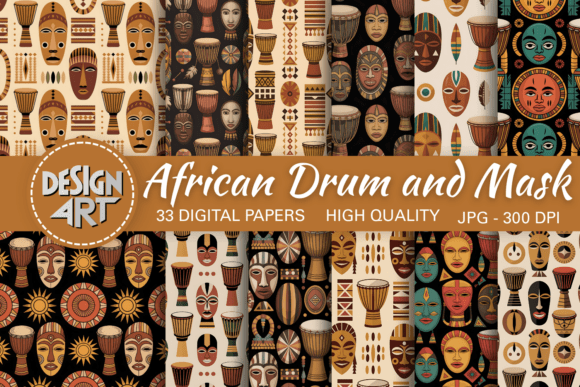
The African Drum and Mask Pattern is a collection of 33 high-resolution, seamless design files that draw from the rich visual language of traditional African art. These patterns incorporate elements such as rhythmic drum motifs, expressive masks, and bold tribal shapes, creating a unique aesthetic that bridges cultural heritage with modern design applications. Each pattern is crafted to reflect the symbolic and artistic depth of African traditions while offering versatility for contemporary creative projects.
What Is the African Drum and Mask Pattern?
The African Drum and Mask Pattern is a set of decorative designs inspired by the ceremonial and artistic expressions of various African cultures. The collection features recurring themes such as drum patterns, mask imagery, and abstract tribal forms. These elements are arranged into seamless repeating patterns, making them suitable for use in fabric design, apparel, packaging, stationery, and digital paper collections. The designs are rooted in the symbolism and aesthetics of traditional African art, which often conveys stories, spiritual beliefs, and communal values through visual representation.
Each pattern in the collection is created with attention to detail, ensuring that the cultural significance of the original motifs is preserved. The designs are available in high resolution (3072 × 3072 px) and can be edited for size, color, rotation, or layering. This flexibility allows designers to adapt the patterns to different projects while maintaining their authenticity and visual impact.
Why Someone Might Be Interested in the African Drum and Mask Pattern
Designers, artists, and creatives who seek to incorporate cultural storytelling into their work may find the African Drum and Mask Pattern appealing. The collection offers a way to engage with African artistic traditions without directly copying specific cultural symbols. Instead, it provides a stylized interpretation that respects the source material while allowing for creative expression.
For those interested in cultural branding, fabric design, or surface pattern work, the African Drum and Mask Pattern offers a ready-to-use resource that aligns with themes of rhythm, symbolism, and heritage. The patterns can be used in both print and digital formats, making them adaptable for a wide range of applications. Additionally, the inclusion of 33 distinct designs ensures variety and reduces the need for custom creation from scratch.
Benefits and Considerations
One of the primary benefits of the African Drum and Mask Pattern is its ability to provide culturally inspired visuals without requiring extensive research or design expertise. For designers who want to integrate African aesthetics into their work, this collection serves as a practical starting point. The high-resolution files also ensure that the patterns maintain clarity when scaled for different uses.
However, there are considerations to keep in mind. While the patterns are inspired by traditional African art, they are not direct reproductions of any specific cultural artifact. This means that users should approach the designs with an understanding of their origins and avoid misrepresentation. It is important to recognize that African art is diverse, and no single collection can fully represent the breadth of cultural expressions across the continent.
Another consideration is the potential for overuse. Since the patterns are designed for broad application, there is a risk that they may become common in certain design niches. Users should evaluate whether the patterns align with their unique vision or if they might benefit from more customized or original designs.
Situations Where It May Be a Strong Fit
The African Drum and Mask Pattern is well-suited for projects that aim to celebrate or reference African cultural heritage. This includes fabric and textile design, where the patterns can add visual interest and cultural depth. It is also ideal for branding efforts that seek to evoke a sense of tradition, rhythm, or storytelling through visual elements.
In digital design, the patterns can be used for stationery, scrapbooking, or background elements in graphic design projects. Their seamless nature makes them easy to integrate into layouts without visible repetition. For educators or cultural institutions, the patterns can serve as visual aids that illustrate traditional African art forms in an accessible format.
Situations Where Alternatives May Be Worth Considering
If a project requires a highly specific or localized representation of African culture, the African Drum and Mask Pattern may not be sufficient. In such cases, working directly with cultural experts or sourcing authentic motifs from specific regions could provide a more accurate and respectful outcome.
Additionally, for designers who prioritize originality or have a strong personal style, relying on pre-made patterns may limit creative freedom. Custom-designed patterns could offer a more unique solution that reflects individual artistic direction while still honoring cultural influences.
Practical Decision-Making Insights
When evaluating the African Drum and Mask Pattern, consider the goals of your project. If the objective is to incorporate cultural inspiration in a general or stylized way, the collection can be a valuable resource. However, if the project demands deep cultural specificity or originality, further exploration of alternative design sources may be necessary.
It is also important to assess how the patterns will be used. For commercial applications, ensure that the licensing terms allow for the intended use and that the designs do not infringe on any cultural or intellectual property rights. Understanding the ethical implications of using cultural motifs in design is essential for responsible creativity.
Ultimately, the African Drum and Mask Pattern offers a convenient and visually engaging way to explore African artistic traditions. Whether used for educational purposes, creative projects, or cultural branding, the collection provides a foundation for incorporating the richness of African heritage into modern design practices.